

















































Y-90 Radioembolization for Liver Cancer
What is Y-90 Radioembolization?
Y-90 Radioembolization is a treatment for primary or metastatic liver cancer. Most cancers are susceptible to radiation, if high enough doses of radiation can be concentrated in a cancer. External beam radiation is limited because the radiation has to pass through the skin and body wall to reach the targeted cancer, with resultant limitations on dose to avoid damage to surrounding structures. Radioembolization allows for internal delivery of radiation through the arteries supplying the cancer, thereby allowing concentration of high doses of radiation in the cancer with minimal effect on the surrounding healthy tissues.
How is Y-90 Radioembolization Performed?
Radioembolization requires at least two treatment sessions that are performed under conscious sedation. The first session is a mapping angiogram, where a catheter is passed into the liver artery from the groin and angiography is used to map all the arteries in the liver circulation. At this time, any arteries passing from the liver circulation to non-target structures, such as the stomach or bowel, can be "embolized" (or blocked off) with coils, to prevent radiation damage to these organs. A test will also be done to confirm that there is no shunting of blood flow through the liver into the lungs.
The second session is the delivery of the radiation into the liver cancer. This radiation comes in the form of a radioactive isotope called Yttrium-90 or Y-90, which is fixed onto tiny glass or resin particles. A microcatheter is placed into the artery supplying the cancer, angiography is performed to confirm appropriate position, and the radioactive microspheres are injected into the artery. The blood flow carries the particles through the artery and into the cancer, where they attach themselves and release the radiation into the tumor. The radiation eliminates the cancer cells over the next 1-3 months.
What are the Risks of Y-90 Radioembolization?
Small risks of bleeding or infection. Radiation can cause harm to the normal liver, and non-target radiation damage to the stomach, bowel, or lung can rarely occur.
Post Procedure & Follow Up
Bed rest for 2-4 hours after each procedure, then discharge home. Although the radioactivity emitted from a treated patient is minimal, some radiation precautions may be prescribed by your interventional radiology physician. A post-embolization syndrome consisting of fatigue, pain, and/or nausea can occur, and may last several days or more.
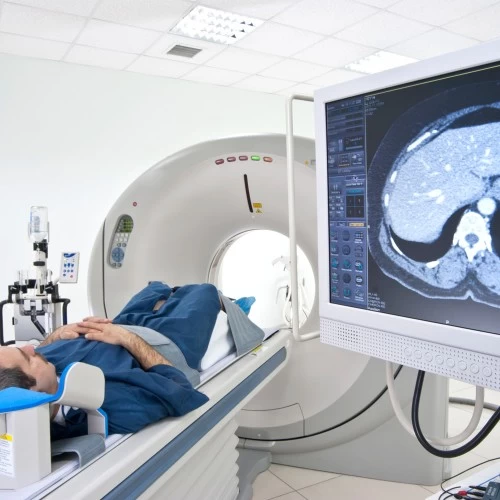
If liver cancer is present in both lobes of the liver, a second radiation delivery session targeting the opposite side of the liver may be arranged for several weeks after the first. A monitoring scan and clinic follow-up are usually arranged a few months after treatment to determine the effectiveness of the therapy and further treatment planning.