












































Abdominal Aortic Aneurysm Evaluation and Management
What are Abdominal Aortic Aneurysms?
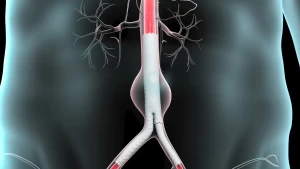
An AAA is a weakening in the wall of the abdominal portion of the aorta, which leads from the heart to the rest of the body, and is the body’s largest blood vessel. AAA most commonly is caused by atherosclerosis, a gradual build-up of cholesterol and scar tissue that damages the walls of blood vessels. People with high blood pressure, those who smoke and those who have a family history of AAA also are at risk. The aorta is an inch or less in diameter. Typically, aneurysms that cause a ballooning of the aorta smaller than 2 inches in diameter are not treated. Those 2-1/2 inches or larger are at risk for life-threatening rupture, and usually are repaired. Patients whose aneurysms are detected at the smaller size typically are checked regularly by their physicians.
What are the symptoms of Abdominal Aortic Aneurysms?
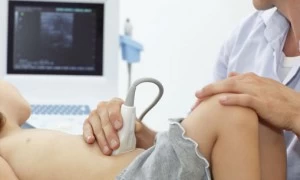
There are no symptoms for AAA. About 90 percent are discovered by accident, when a physician is testing for another condition such as gall stones or kidney stones. Although a doctor can sometimes detect an AAA just by feeling the abdomen, ultrasound is the best method.
How Common are Abdominal Aneurysms?
Abdominal aortic aneurysms occur in 5 percent to 7 percent of people age 60 or older, and men are four times more likely to have AAA than women. Every year, more than 15,000 people die of AAA, making it the 13th leading cause of death in the United States.
Why Do Abdominal Aneurysms Occur?
Atherosclerotic disease, or "hardening of the arteries", can result in aneurysm formation (ballooning) of the abdominal (belly) and/or thoracic (chest) aorta, the main blood vessel of the body. This disease can have profound effects on one's health and can even result in death should the aneurysm rupture.
How are Abdominal Aortic Aneurysms Treated?
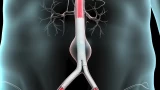
These aneurysms have traditionally been treated with surgery, however this major operation can be associated with a significant recovery time and morbidity and mortality rate. Recently, new techniques have been developed to treat aneurysms without open surgery. Interventional radiologists make a small nick in the groin and, under X-ray guidance, and insert a catheter into a blood vessel that leads to the aorta. A collapsed stent-graft, also known as an endograft (a small fabric tube) is inserted through the catheter and moved to the site of the aneurysm, where it is deployed, reinforcing the aorta and creating a stronger pathway for the blood. Blood flowing through the stent-graft no longer puts pressure on the ballooning walls of the aneurysm that are outside of the graft.
Placing the stent graft within the aorta at the location of the aneurysm creates a new channel for blood flow which effectively excludes the aneurysm from the circulation. The aneurysm clots off, leaving blood flowing through the stent graft in the same fashion as if a "vascular graft" had been placed during the routine type of surgical procedure. After placing the stent graft, the access site in the groin is closed and the patient is taken to the recovery room. In general, stent-grafting requires less anesthesia and a shorter hospital stay, and results in less overall risk to the heart than surgery.
How New is This Technique?
This device has been used successfully around the United States and in Europe to treat aortic aneurysms, and certain grafts have been recently been approved by the FDA for the U.S. Each patient is fully evaluated to see if they are a candidate for this procedure. If you have been told that you have an "abdominal aortic aneurysm" or "thoracic aortic aneurysm" and are not a good surgical candidate, you may obtain further details concerning this state-of-the-art procedure.
Post Procedure & Follow Up
The hospital stay usually is two days or less; recovery takes an average of 11 days and there are fewer complications than with open surgical repair.
About 15 percent to 20 percent of patients who have the stent-graft procedure experience leakage into the aneurysm sac. Many need no treatment, but are followed closely. Others may undergo embolization, a vascular and interventional radiology technique that cuts off blood flow to the problem area to prevent further leakage.
Typically, the vascular and interventional physician performs procedures through a very small nick in the skin, about the size of a pencil tip. Interventional radiology treatments are generally easier for the patient than surgery because they involve no surgical incisions, less pain and shorter hospital stays.